Geometry DashAPK
Table of Contents
Quick answer: Geometry Dash can train skills like timing, visual attention, pattern memory and persistence, and its level editor teaches logical thinking. However, no scientific study has tested Geometry Dash specifically, so the benefits are based on wider research into fast-paced and rhythm games. Like any game, it is healthiest in moderate sessions with breaks.
Skills Geometry Dash Trains
Timing and rhythm
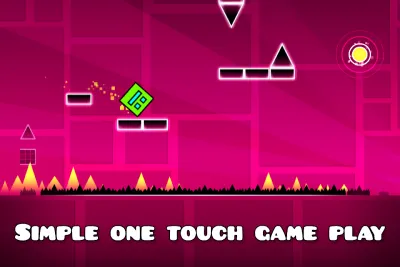
Every obstacle is placed on the beat, so you constantly match taps to music. This is similar to the timing practice used in rhythm games and music training.
Visual attention
You must read spikes, portals and orbs that appear quickly at high speed, often while the colours and camera change.
Pattern memory
Harder levels are learned section by section, much like memorising a piece of music.
Persistence
Hundreds of attempts on one level teach you to break a big problem into small steps and keep going after failure.
What Research Says About Games Like This
Research on video games and the brain is mixed but interesting. A widely cited 2003 study by C. Shawn Green and Daphne Bavelier in the journal Nature found that players of fast action video games performed better on several tests of visual attention than non-players. Later studies have found similar links for reaction time and the ability to track several objects at once.
Two important limits apply:
- Most studies looked at action shooters, not rhythm platformers. Geometry Dash shares some demands (speed, precise timing) but not all.
- Getting better at a game does not automatically make you better at unrelated tasks like school tests. Scientists call this the "transfer" problem.
So the honest answer is: Geometry Dash exercises real mental skills, but it is not a proven "brain training" tool.
Is Geometry Dash Educational?
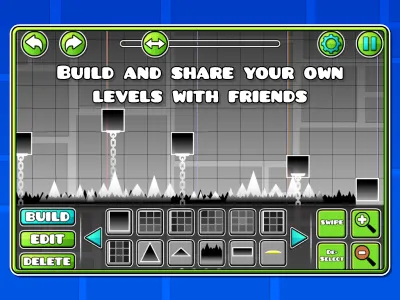
The most educational part of Geometry Dash is the level editor. Building a level means planning, testing and fixing mistakes. Advanced creators use triggers, group IDs and counters that work a lot like basic programming: "when the player reaches this point, move these objects and change this colour". Many teachers use similar ideas in game-design lessons, and the popular search for how to make Geometry Dash in Scratch shows how many young players start coding because of it.

Possible Downsides
- Frustration. The game is designed to be hard. Repeated failure can cause anger, especially in younger players.
- Screen time. "One more attempt" can quickly turn into hours.
- Flashing visuals. Many user levels use bright flashes and fast colour changes. People with photosensitive epilepsy should be careful and use options that reduce effects.
- Hand strain. Very long sessions of rapid tapping can make fingers and wrists sore.
How to Play in a Healthy Way
- Set a session length, for example 30 minutes, then take a break.
- Stop after a long streak of failed attempts; come back fresh.
- Mix playing with building in the editor, which is calmer and more creative.
- Use practice mode to make progress feel steady instead of random.
- Parents: the game is rated Everyone 10+ on Google Play and has no ads or in-app purchases in the full version.
Want to try it? Start with the free Geometry Dash Lite or read our beginner guide.
Frequently Asked Questions
Is Geometry Dash good for your brain?
It trains timing, visual attention, pattern memory and persistence, and the level editor builds logical thinking. No study has tested Geometry Dash directly, so these benefits are based on research into similar fast-paced games.
Is Geometry Dash educational?
Yes, especially the level editor, which teaches planning, testing and logic similar to basic programming.
Can Geometry Dash improve reaction time?
Research on fast-paced video games has linked them to faster reaction times and better visual attention, and Geometry Dash uses the same kind of quick decisions.
Is Geometry Dash OK for kids?
Google Play rates it Everyone 10+. The full version has no ads or in-app purchases. Parents should watch for frustration and set time limits.
Can Geometry Dash cause seizures?
Many levels include flashing lights. People with photosensitive epilepsy should be cautious and avoid levels with intense flashing effects.